
History Trail


-
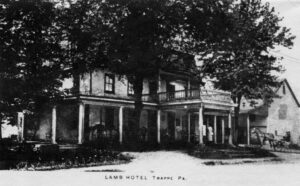
Lamb Tavern
724 W. Main StreetLocated across from Augustus Lutheran Church, the Lamb Tavern was built about 1800. One of the first proprietors was Cornelius Tyson Sr. In 1836, the building was bought by schoolmaster and future U.S. congressman Jacob Fry Jr. (known as Honest Jacob) and described in the deed as a “certain Tavern stand, Sign of the Golden Lamb.” Private
-
Olevian Hall
640 E. Main StreetAcquired by Ursinus in 1967, this building was named after a previous Olevian Hall that was razed to make way for the construction of Pfahler Hall in 1931. Both were named after Caspar Olevian, a German Reformed theologian. Private
-
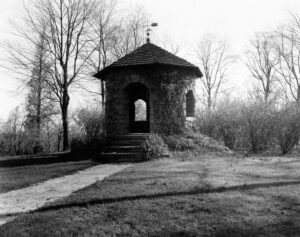
Pennsylvania Female College Monument
Glenwood AvenueThis monument marks the site of the Pennsylvania Female College, founded in 1851 by J. Warren Sunderland as the Montgomery Female Seminary and chartered by the state legislature in 1853. A four-year liberal arts college, it closed in 1880. During its 30-year tenure, more than 1,000 young women were educated there. The seminary building once stood at the end of Glenwood Avenue on a bluff overlooking the Perkiomen Creek. Open to the public
-
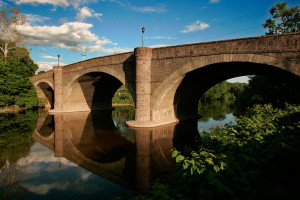
Perkiomen Bridge
The Perkiomen Bridge was completed in 1799 and is one of the oldest stone arch bridges still in use in the United States.
-
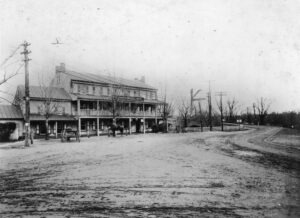
Perkiomen Bridge Hotel
1 E. Main StreetAccording to local tradition, the oldest portion of this building was erected in 1701 for Edward Lane. By 1798, the inn consisted of a two-story stone building measuring 33 x 25 feet and a one-story stone kitchen of 30 x 20 feet. It was further expanded in the 1800s and became a fashionable hotel and summer resort due to its location along the Perkiomen Creek. Listed on the National Register of Historic Places in 1985, until recently it was the oldest hotel in continuous operation in the country.
-
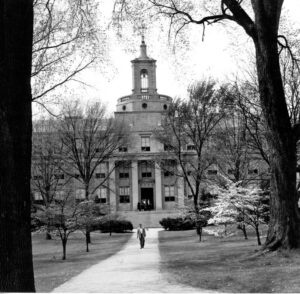
Pfahler Hall
601 E. Main StreetInitially known as the Science Building, Pfahler Hall was renamed in 1942 after Dr. George E. Pfahler, a pioneer in the field of radiology. Here Dr. John W. Mauchly, professor of physics from 1933 to 1941, began research that would lead him to co-invent the ENIAC, the first electronic generalpurpose computer. The observatory atop the building was constructed in the 1950s, using scrap and war surplus material, to house a telescope loaned by the Franklin Institute. Private
-
Shreiner Hall
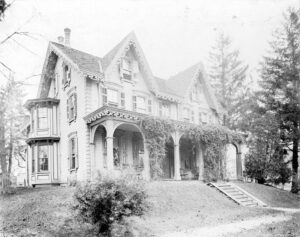
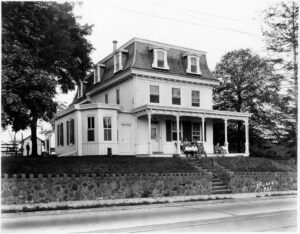
600 E. Main StreetBuilt in 1876 for Dr. John H. A. Bomberger, founder and first president of Ursinus College, this structure was originally known as Zwinglihof after the Swiss theologian and Reformation leader Ulrich Zwingli. Dr. Bomberger lived here until his death in 1890, after which it became Ursinus property. In 1909, it became a women’s dormitory. Private
-
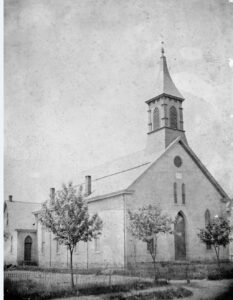
St. Luke’s Church
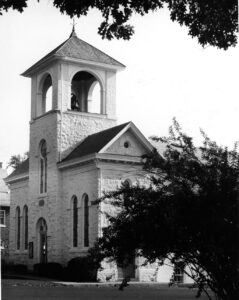
202 W. Main StreetFounded in 1742, St. Luke’s congregation initially worshipped in a log church located across the street in the present-day cemetery. A stone building replaced it on the same site in 1835. The present church was erected in 1874 under the leadership of Rev. John H. A. Bomberger, founder of Ursinus College and a Reformed Church minister. Open to the public
-
The Speaker’s House
151 W. Main StreetBuilt in 1763 for John and Silence Schrack, this elegant stone house was owned by Frederick and Catharine Muhlenberg from 1781 to 1791. During this time, Frederick served as a member of the Continental Congress; Speaker of the Pennsylvania Assembly; first president judge, recorder of deeds, and register of wills for Montgomery County; and first Speaker of the U.S. House. From 1791 to 1803, the house was owned by Francis and Mary (Muhlenberg) Swaine; it later served as an Ursinus dormitory, from 1924 to 1944, known as Highland Hall. Open to the public.
-
Toll Gate House
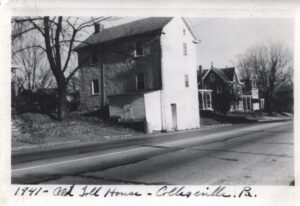
12 and 14 W. Main StreetBuilt in the early 1800s, this stone dwelling was the first toll gate house in Trappe. Toll gates were permitted every five miles along the Philadelphia and Reading Turnpike. In the 1820s, John Todd was the local toll gate keeper. Private
-
Trappe Borough Hall
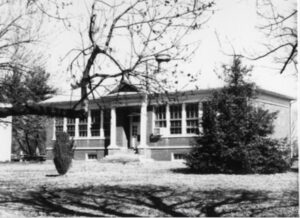
525 W. Main StreetBuilt in 1922 as a school, this building now serves as the borough hall. Paintings of local historic sites by artist Julie Longacre are displayed in the council room. Behind the building is a tot-lot, picnic pavilion, and multipurpose play area. Open to the public
-
Trappe Tavern
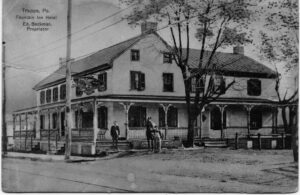
418 W. Main StreetOriginally known as the Fountain Inn, this building has served as a tavern since it was built in the late 1700s. A “Big Spring” nearby provided water via underground wooden pipes to a distillery and the inn, which had three fountain pumps in the yard for watering thirsty horses. Traces of the spring remain in the pond located at Rambo Park. By 1823, the inn’s barn, sheds, and stables could accommodate up to 75 wagons and 150 horses. The Mingo Express Horse Company was founded here in 1836 and continues to meet annually. Since 1989, the tavern has served as a restaurant and bar. Open to the public
-
Trinity Church
532 E. Main StreetFounded in 1854 and incorporated the following year, Trinity Reformed U.C.C. has a long history of welcoming members of the community for worship. The church played a prominent role in the abolition movement, and 27 Civil War veterans are buried in the cemetery. Every pastor to this day has been an Ursinus graduate. Until Bomberger Hall was completed in 1892, Trinity hosted the college’s assemblies, commencement, and religion classes. In 1922, an addition was built and named after the church’s first pastor, Dr. Joseph Hendricks. Known as the Hendricks Building, it houses community gatherings and served as the town’s first movie theater. Open to the public
-
Warren Lodge
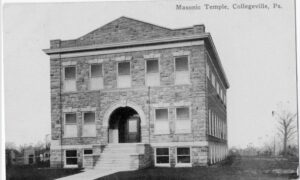
324 E. Main StreetWarren Lodge #310 is home to the Collegeville-area Free and Accepted Masons, founded in 1857. Meetings have been held in this building since it was erected in 1913. Private
-
Washington Hall
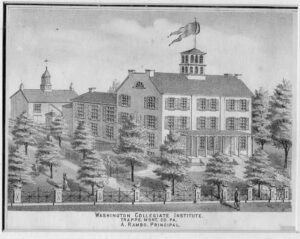
550 W. Main StreetBuilt about 1854, this three-story brick building was the second location of the Washington Hall Collegiate Institute (est. 1830 as the Trappe Boarding School). Henry Prizer taught the original school (see 360 W. Main). Private
-
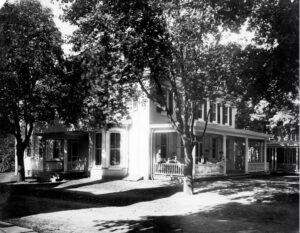
Zwingli Hall
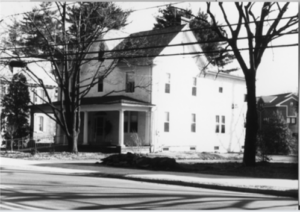
620 E. Main StreetBuilt during the mid-1800s as a private residence, Zwingli Hall retains much of its original charm, including a large front porch. It is named after Ulrich Zwingli, a Swiss theologian and Reformation leader. Private
- « Previous
- 1
- 2